The authors lived at the Heart Mountain Relocation Center with their parents from April 1948 until November 1950, occupying barracks that once housed Japanese residents.
Ben and his late brother Jim, weren’t trained historians or writers. Their interest in adding detail to the story of Heart Mountain grew out of their experience living at the site with their parents. Their father, B.D. Murphy was a civil engineer with the Bureau of Reclamation who used the deserted Center as the headquarters of the Shoshone Reclamation Project. The boys learned firsthand of the hardships of living in the cold, cramped and dusty housing-the kind that had been home to thousands of Japanese Americans a few years earlier. Many decades later, Ben and Jim decided on an ambitious project — to learn much more about Heart Mountain than what they remembered as boys and then help others see and feel the harsh reality of what was built at Heart Mountain.
“Jim and I decided to research that unusual place where spent some of our growing-up years. Heart Mountain wasn’t a very pretty place; the barracks remaining when we lived there looked pretty flimsy. How did those people from California ever survive living there in that harsh weather? We decided to find out. Since we had lived there and had a general idea of how it was built, we focused our interest on the infrastructure; whose idea was it to build such a place? Why was it built where it was? Who designed it? Who constructed it? Who were these people that were imprisoned? What did they do all day while locked up? Where did its prisoners come from and where did they go? Hopefully, in answering my own questions I will have been able to answer others’ questions about this dreadful place”
– Ben Murphy
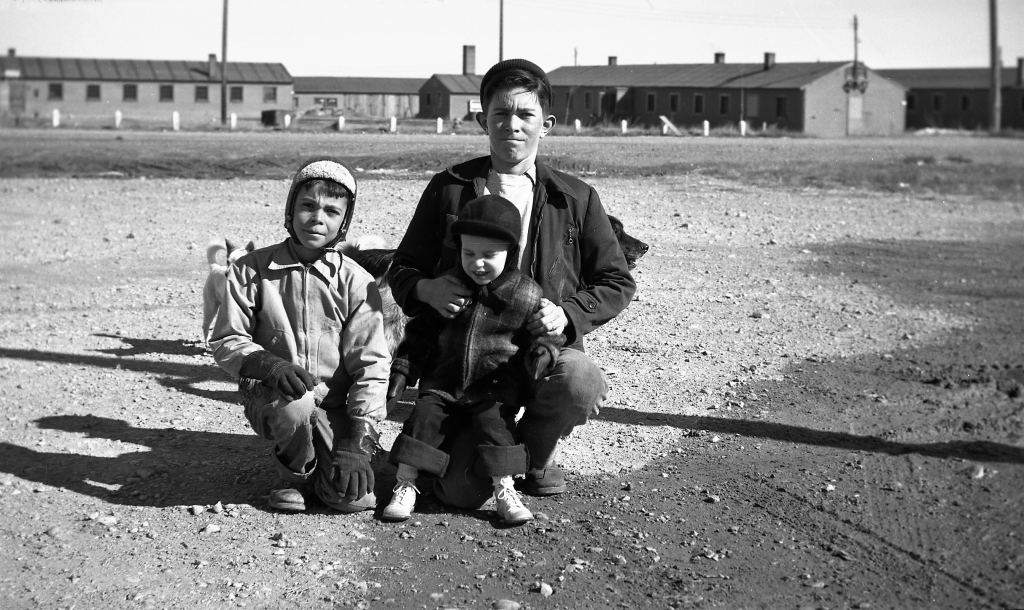
 Bernard Murphy and James Murphy